
Key Takeaways
- Spot repairs make sense for isolated, localized damage on an otherwise sound line; full replacement is the smarter long-term choice when a pipe is old, repeatedly clogging, or failing in multiple spots.
- A sewer video inspection is the only reliable way to decide — it shows the exact location, material, and severity of the damage before any digging begins.
- Trenchless methods (pipe lining and pipe bursting) can replace a sewer line with little or no excavation, protecting your Warren or Sterling Heights landscaping and driveway.
- As a rule of thumb, if repairs would cost more than 40–50% of a full replacement, replacing the line is usually the better value.
A failing sewer line is one of the most stressful problems a homeowner can face — and one of the most expensive to get wrong. The big question is almost always the same: do you patch the problem with a targeted repair, or replace the whole line? The right answer depends on the pipe's age, material, and the type of damage. This guide walks through how plumbers in Warren and across Macomb County make that call, so you can make an informed decision instead of guessing.
Should You Repair or Replace Your Sewer Line?
Repair makes sense when the damage is localized — a single crack, a small offset joint, or one root intrusion on a pipe that is otherwise in good condition. Replacement is the better choice when the line is near the end of its lifespan, made of failure-prone material like clay or Orangeburg, or showing damage in multiple locations. The deciding factors are the extent of the damage, the age and material of the pipe, and the long-term cost difference.
Think of it like a roof. One missing shingle gets repaired. A roof with widespread wear and recurring leaks gets replaced, because patching it repeatedly costs more than doing it right once. Sewer lines follow the same logic. A 15-year-old PVC line with a single root-damaged joint is a clear repair candidate. A 70-year-old clay line that has backed up three times in two years is telling you it's time for a full replacement.
What Causes Sewer Line Damage in Michigan?
Sewer lines in Southeast Michigan fail for a handful of common reasons, and the cause often points toward repair or replacement. Tree root intrusion, aging pipe material, and ground movement from our freeze-thaw cycles are the leading culprits in Macomb County homes.
Tree Roots
Roots seek out the moisture and nutrients inside sewer pipes, infiltrating through tiny cracks and joints. In older Warren and Royal Oak neighborhoods with mature trees, root intrusion is the number one cause of sewer backups. If roots have entered at a single point on an otherwise solid pipe, a spot repair plus periodic hydro jetting can resolve it. If roots have crushed or wrapped large sections, replacement is usually necessary.
Aging and Outdated Pipe Materials
Many homes built before the 1980s in Macomb County still have clay tile or Orangeburg (a tar-impregnated fiber pipe) sewer lines. Clay is brittle and prone to cracking, while Orangeburg deforms and collapses with age. When the pipe material itself is the problem, replacement with modern PVC is the only lasting fix — repairs on failing clay or Orangeburg tend to be short-lived.
Freeze-Thaw Ground Shift
Michigan's harsh winters drive repeated freeze-thaw cycles that shift soil and stress underground pipes. This movement causes joints to separate (called offset joints) and pipes to sag, creating low spots called bellies where waste collects. A single offset joint can sometimes be repaired; a line with multiple sags and breaks is a replacement candidate.
How a Sewer Video Inspection Decides the Question
You should never authorize a sewer repair or replacement without a camera inspection first. A sewer video inspection sends a waterproof camera through the line, showing the exact location, depth, material, and severity of the damage on a monitor. This is the single most important step in the repair-versus-replace decision.
The inspection reveals things no homeowner can see from above ground: whether the damage is isolated or widespread, how much of the pipe is still structurally sound, and whether the line has the right slope to drain properly. It also pinpoints the damage location so that if a spot repair is chosen, excavation is minimal. At H2O Plumbing, we walk customers through the footage so they can see the condition of their line with their own eyes before deciding anything. A typical inspection takes 30 to 60 minutes.
Trenchless vs. Traditional Sewer Replacement
If replacement is the answer, you have two broad approaches: traditional excavation or trenchless methods. Trenchless repair restores or replaces the pipe with little to no digging, while traditional replacement involves excavating a trench along the full length of the line. Each has its place depending on the pipe's condition and layout.
Trenchless Pipe Lining (CIPP)
Cured-in-place pipe lining inserts a resin-saturated liner into the existing pipe and hardens it into a new pipe within the old one. It works well when the original pipe is still mostly intact and properly aligned. Because it requires only one or two small access points, it spares your lawn, driveway, and landscaping — a major advantage for finished yards in Sterling Heights and Troy.
Trenchless Pipe Bursting
Pipe bursting pulls a new pipe through the old one while simultaneously fracturing the old pipe outward. It's ideal for replacing collapsed, badly deformed, or undersized lines without a full trench. Like lining, it needs only small entry and exit pits.
Traditional Excavation
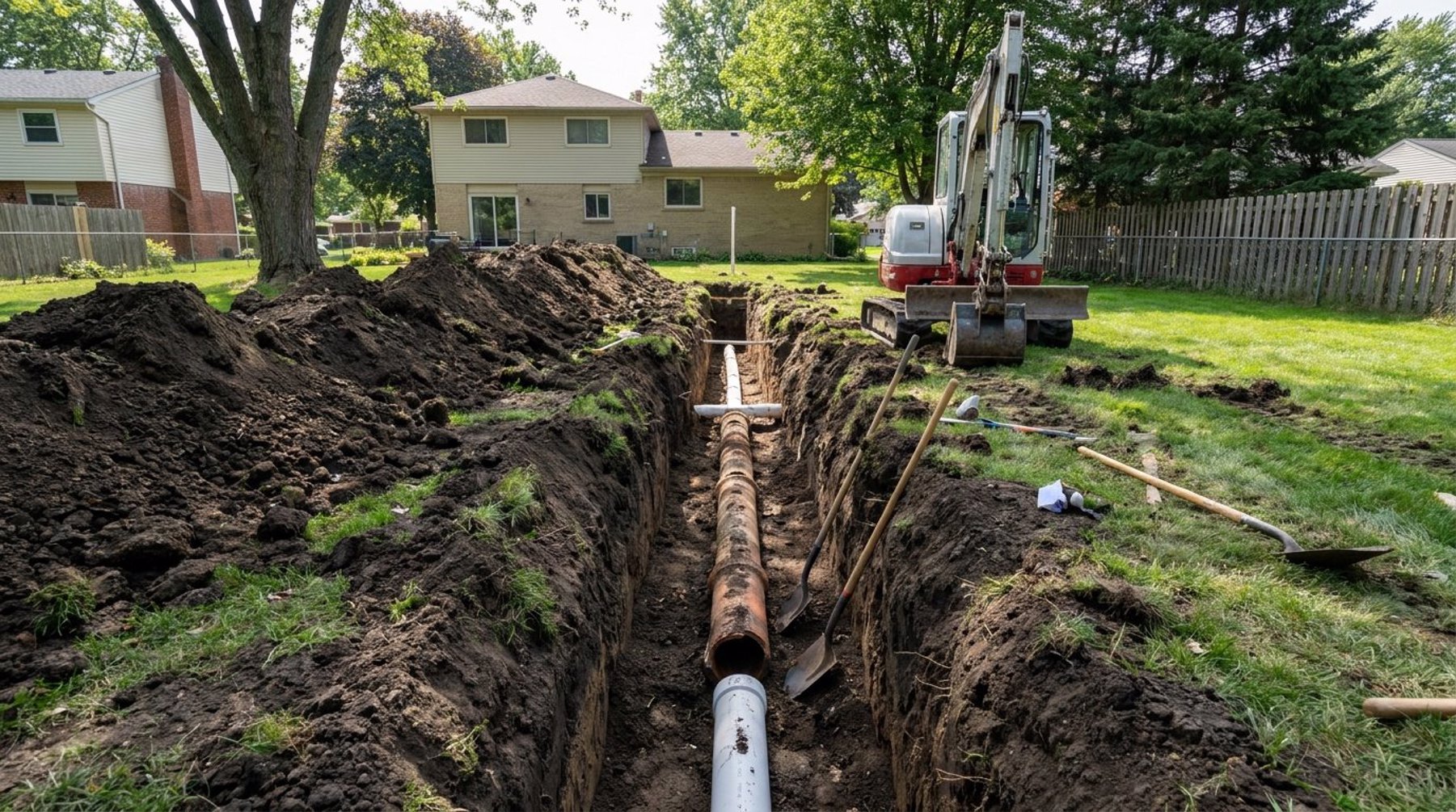
Open-trench replacement is sometimes unavoidable — when the line has severe sags, a complete collapse, or a route that trenchless equipment can't navigate. It's the most disruptive option but allows full access and reconfiguration of the line when needed. A professional sewer repair assessment determines which method fits your situation.
The Cost Factor: Making the Smart Financial Call
Cost is usually the deciding factor, and the math is simpler than people expect. As a general rule, if the cost of repairs reaches 40 to 50 percent of a full replacement, replacing the line is the better long-term value — especially on older pipe that will likely need more repairs soon. Several factors drive the final number.
- Pipe depth and length: Deeper, longer lines cost more to access and replace.
- Location of the damage: Damage under a driveway, sidewalk, or mature landscaping raises restoration costs and makes trenchless methods more attractive.
- Pipe material and condition: Failing clay or Orangeburg signals that more failures are coming, tilting the decision toward replacement.
- Repair history: A line that has already been repaired once or twice is often cheaper to replace outright than to keep patching.
Beware of any plumber who quotes a full replacement without a camera inspection, or who pushes excavation when trenchless would clearly work. Getting a clear, itemized estimate — and understanding exactly what is being recommended and why — is part of choosing a trustworthy contractor.
When a Sewer Problem Becomes an Emergency
Some sewer issues can't wait for a scheduled appointment. Raw sewage backing up into your home, multiple drains clogging at once, or sewage pooling in your yard are signs of a serious line failure that needs immediate attention. These situations pose health hazards and can cause expensive water damage the longer they go unaddressed.
If you're dealing with a backup right now, shut off water use in the home and call for emergency plumbing service. H2O Plumbing offers 24/7 emergency response across Warren, Macomb County, and Metro Detroit. You can reach our team any time at our contact page or by calling (586) 746-8741.
Frequently Asked Questions
Should I repair or replace my sewer line?
Repair if the damage is isolated to one spot on an otherwise sound pipe — like a single crack or root intrusion. Replace if the line is old, made of clay or Orangeburg, has multiple failure points, or has already been repaired before. A sewer video inspection is the only reliable way to know which applies to your line.
How do I know if my sewer line is damaged?
Common warning signs include frequent or multiple drain backups, gurgling toilets, slow drains throughout the house, sewage odors indoors or outside, unusually lush or sunken patches in the yard, and water pooling above the sewer line. A camera inspection confirms the cause and location.
What is trenchless sewer replacement?
Trenchless replacement restores or replaces a sewer line with little to no digging, using methods like pipe lining (a new pipe cured inside the old one) or pipe bursting (a new pipe pulled through while breaking up the old one). It requires only small access points, protecting your lawn and driveway compared to traditional open-trench excavation.
How long does a sewer line replacement last?
A modern PVC sewer line installed correctly can last 50 to 100 years. Trenchless cured-in-place liners are typically rated for around 50 years. Proper installation, correct slope, and avoiding tree planting directly over the line all help maximize lifespan.
Can tree roots be removed without replacing the pipe?
Yes, if the pipe is structurally sound. Hydro jetting can clear roots and restore flow, and a spot repair can seal the entry point. But if roots have already cracked or crushed sections of the pipe, clearing them is only a temporary fix and replacement is the lasting solution.