

Key Takeaways
- Most Michigan homes — especially in Macomb County — need a sump pump due to the region's high water table and heavy rainfall patterns.
- Professional sump pump installation typically takes a few hours and protects your basement from thousands of dollars in water damage.
- Battery backup sump pumps provide critical protection during power outages, which often coincide with the severe storms that cause flooding.
- Annual sump pump maintenance extends the life of your system and ensures it works when you need it most.
Why Michigan Homes Need Sump Pumps
Michigan's high water table and clay-heavy soil make basement flooding one of the most common — and expensive — problems homeowners face. A properly installed sump pump is the single most effective defense against groundwater intrusion, and for most homes in Warren, Sterling Heights, and across Macomb County, it's not a luxury — it's a necessity.
Southeast Michigan receives an average of 33 inches of rainfall per year, plus significant snowmelt in spring. The clay soil common throughout Macomb County doesn't drain well, which means water pressure builds against your foundation walls and floor. Without a sump pump to actively remove that water, it finds its way inside — through cracks, joints, and any imperfection in your foundation.
Basement flooding isn't just an inconvenience. Standing water creates ideal conditions for mold growth, which can develop within 24–48 hours. It damages drywall, flooring, stored belongings, and can compromise your home's structural integrity over time. FEMA estimates that just one inch of water in a basement causes an average of 5,000 in damage. Sump pump installation in Macomb County is one of the smartest investments a homeowner can make.
How Sump Pump Installation Works
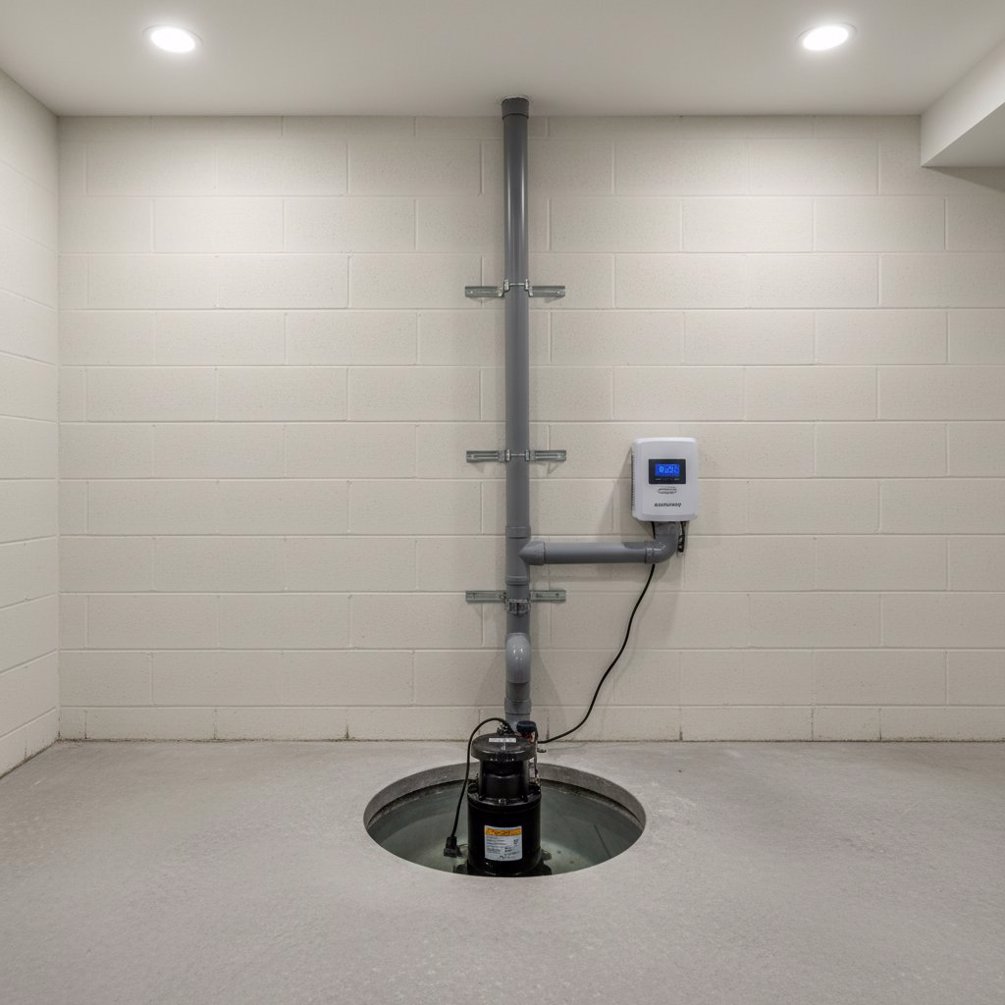
A sump pump installation involves cutting a pit (called a sump basin) into the lowest point of your basement floor, setting the pump inside, and routing a discharge pipe to carry water safely away from your foundation. A licensed plumber can typically complete the job in four to six hours for a standard installation.
Here's what the process looks like:
- Site assessment — A plumber evaluates your basement to determine the best location for the sump pit, considering water flow patterns and foundation layout.
- Pit excavation — A hole roughly 24 inches deep and 18 inches wide is cut into the concrete floor and soil beneath.
- Pump and basin placement — A sump basin (liner) is set into the pit, and the pump is installed inside with a float switch that activates automatically when water reaches a set level.
- Discharge line routing — PVC piping carries water from the pump to the exterior, directed away from the foundation — typically at least 10 feet from the home.
- Electrical connection — The pump connects to a dedicated GFCI-protected outlet for safe operation.
- Testing — The system is tested by pouring water into the basin to confirm the float switch activates, the pump runs, and water discharges properly.
If your home already has a sump pit but the pump is old or failing, replacement is simpler and faster — often completed in under two hours. If you're unsure about your current system's condition, H2O Plumbing offers inspections to assess whether a sump pump installation or replacement is the right call.
Battery Backup: Why It Matters in Michigan
A battery backup sump pump is essential in Michigan because the storms that cause flooding also knock out power — and a primary sump pump without electricity is just a piece of metal sitting in a hole. Battery backup systems kick in automatically during outages, keeping your basement dry when it matters most.
Michigan's spring and summer thunderstorms are the leading cause of both basement flooding and power outages in the Metro Detroit area. Many of those outages last hours or even days — more than enough time for a basement to take on several inches of water.
Battery backup pumps typically provide 8–12 hours of runtime on a fully charged battery, depending on how frequently the pump cycles. For homeowners in flood-prone areas of Warren or Clinton Township, a backup system provides genuine peace of mind. Some newer systems also offer Wi-Fi monitoring, sending alerts to your phone when the backup activates or the battery needs charging.
When considering sump pump installation in Macomb County, we strongly recommend including a battery backup as part of the initial setup. Adding one later is straightforward, but bundling it with the original installation saves time and labor costs.
Signs Your Existing Sump Pump Needs Attention
Most sump pumps last 7–10 years with proper care, but many homeowners don't realize their pump is failing until water is already in the basement. Knowing the warning signs lets you act before a minor issue becomes a flood.
Watch for these red flags:
- Strange noises — Grinding, rattling, or thumping sounds often indicate a worn impeller or motor bearing.
- Frequent cycling — If your pump turns on and off rapidly, the float switch may be stuck or the pump may be undersized for your water volume.
- Visible rust or corrosion — Discolored water or rust on the pump housing means the unit is deteriorating.
- The pump runs but water doesn't leave — This usually points to a blocked or frozen discharge line.
- The pump doesn't turn on at all — Could be an electrical issue, a failed float switch, or a dead motor.
- Water in the basement despite having a sump pump — The pump may be overwhelmed, improperly sized, or the pit may need to be repositioned.
If you notice any of these issues, don't wait for the next heavy rain to find out if your pump can keep up. A quick inspection from a licensed plumber can tell you whether a repair, replacement, or upgraded system is needed. Contact H2O Plumbing or call (586) 746-8741 for a sump pump evaluation.
Sump Pump Maintenance Tips
Annual maintenance keeps your sump pump reliable and extends its lifespan well beyond the average. Most maintenance tasks take less than 30 minutes and require no special tools — though a professional inspection every year or two is worthwhile insurance.
Here's a simple maintenance checklist:
- Test the pump quarterly — Pour a bucket of water into the pit to make sure the float switch triggers and the pump activates.
- Clean the pit — Remove debris, gravel, and sediment from the sump basin at least once a year. Debris can clog the pump intake or jam the float switch.
- Inspect the discharge line — Make sure the exterior discharge point is clear of dirt, ice, or debris. In Michigan winters, frozen discharge lines are a common cause of sump pump failure.
- Check the check valve — This one-way valve prevents discharged water from flowing back into the pit. A failing check valve makes the pump work harder and cycle more often.
- Test the battery backup — If you have a backup system, test it separately by unplugging the primary pump and triggering the float switch. Replace the battery every 2–3 years or per manufacturer guidelines.
The best times to perform maintenance are early spring (before the heavy rains) and late fall (before the ground freezes). If you'd prefer a professional handle it, our service team can perform a thorough sump pump inspection and cleaning as part of a routine plumbing checkup.
Preventing Basement Flooding Beyond the Sump Pump
A sump pump is the foundation of basement flood prevention, but pairing it with a few additional measures creates a comprehensive system that keeps your lower level dry in even the worst conditions Shelby Township and Sterling Heights weather can throw at you.
Consider these additional steps:
- Grade your landscaping — The soil around your foundation should slope away from the house at roughly 1 inch per foot for at least 6 feet.
- Extend downspouts — Gutter downspouts should discharge at least 4–6 feet from the foundation. Splash blocks or underground extensions keep that water moving away.
- Seal foundation cracks — Hydraulic cement or epoxy injection can seal visible cracks in poured concrete foundations. This slows water intrusion while your sump pump handles groundwater.
- Install a French drain — An interior perimeter drain system channels water from along your foundation walls to the sump pit, giving the pump a clear path to remove it.
- Monitor humidity — Keep basement humidity below 60% with a dehumidifier to prevent mold growth even when no visible water is present.
Taking a layered approach to waterproofing protects your home, your belongings, and your investment. And if you're starting from scratch or upgrading your current setup, professional sump pump installation is the right first step.
Frequently Asked Questions
Do I need a sump pump if my basement has never flooded?
Yes — in Southeast Michigan, a dry basement today doesn't guarantee a dry basement tomorrow. Changes in the water table, new construction nearby, aging foundation seals, and unusually heavy rain can all introduce water for the first time. A sump pump is preventive protection, much like homeowner's insurance. Most plumbing professionals in Macomb County recommend installation even in homes without a flooding history.
How much does sump pump installation cost in Michigan?
A standard sump pump installation in the Warren and Macomb County area typically ranges from $800 to $2,500, depending on whether you need a new pit excavated, the type of pump selected, and whether a battery backup is included. Replacing an existing pump in a functioning pit is on the lower end. For an accurate estimate tailored to your home, contact a licensed local plumber for an in-home assessment.
How do I prevent my basement from flooding in Michigan?
The most effective approach combines a working sump pump (with battery backup) with proper exterior drainage. Make sure your landscaping slopes away from the foundation, extend gutter downspouts at least 4–6 feet from the house, seal any foundation cracks, and consider an interior French drain system. Regular sump pump maintenance — testing it quarterly and cleaning the pit annually — ensures the system works when heavy Michigan rains hit.
How long does a sump pump last before it needs to be replaced?
Most sump pumps last 7–10 years, though pumps that run frequently due to high water table conditions may wear out sooner. Battery backup pumps typically need battery replacement every 2–3 years. If your pump is making unusual noises, cycling frequently, or is more than 8 years old, have a plumber inspect it before the next rainy season.